
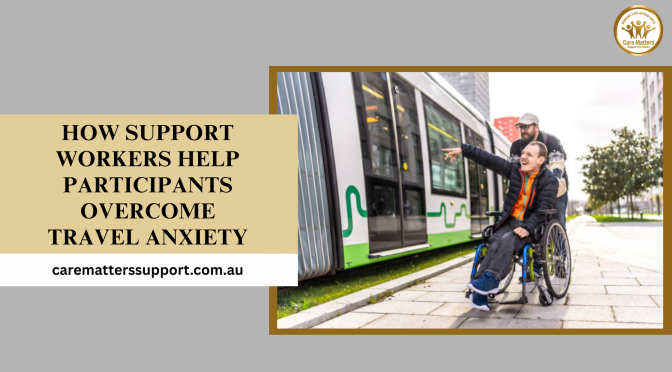
Travelling independently is an important part of everyday life. Whether it involves attending appointments, participating in community activities, visiting friends, or accessing essential services, being able to travel confidently can significantly improve a person’s independence and quality of life.
However, for many NDIS participants in Geelong and Werribee, travelling can feel overwhelming. Anxiety about unfamiliar environments, public transport, crowded places, or unexpected changes can make even short journeys stressful. This is where experienced support workers play a valuable role.
Through patience, encouragement, and personalised assistance, support workers help participants gradually build the confidence needed to travel safely and comfortably.
Understanding the Causes of Travel Anxiety
Travel-related anxiety can affect people for many different reasons. Some participants may have experienced negative situations in the past, while others may struggle with uncertainty, sensory sensitivities, mobility challenges, or communication barriers.
Support workers take the time to understand each participant’s concerns before developing strategies that suit their individual needs. This person-centred approach ensures participants feel heard, respected, and supported throughout the process.
By identifying specific triggers, support workers can help reduce anxiety before a journey even begins.
Preparing Participants Before the Journey
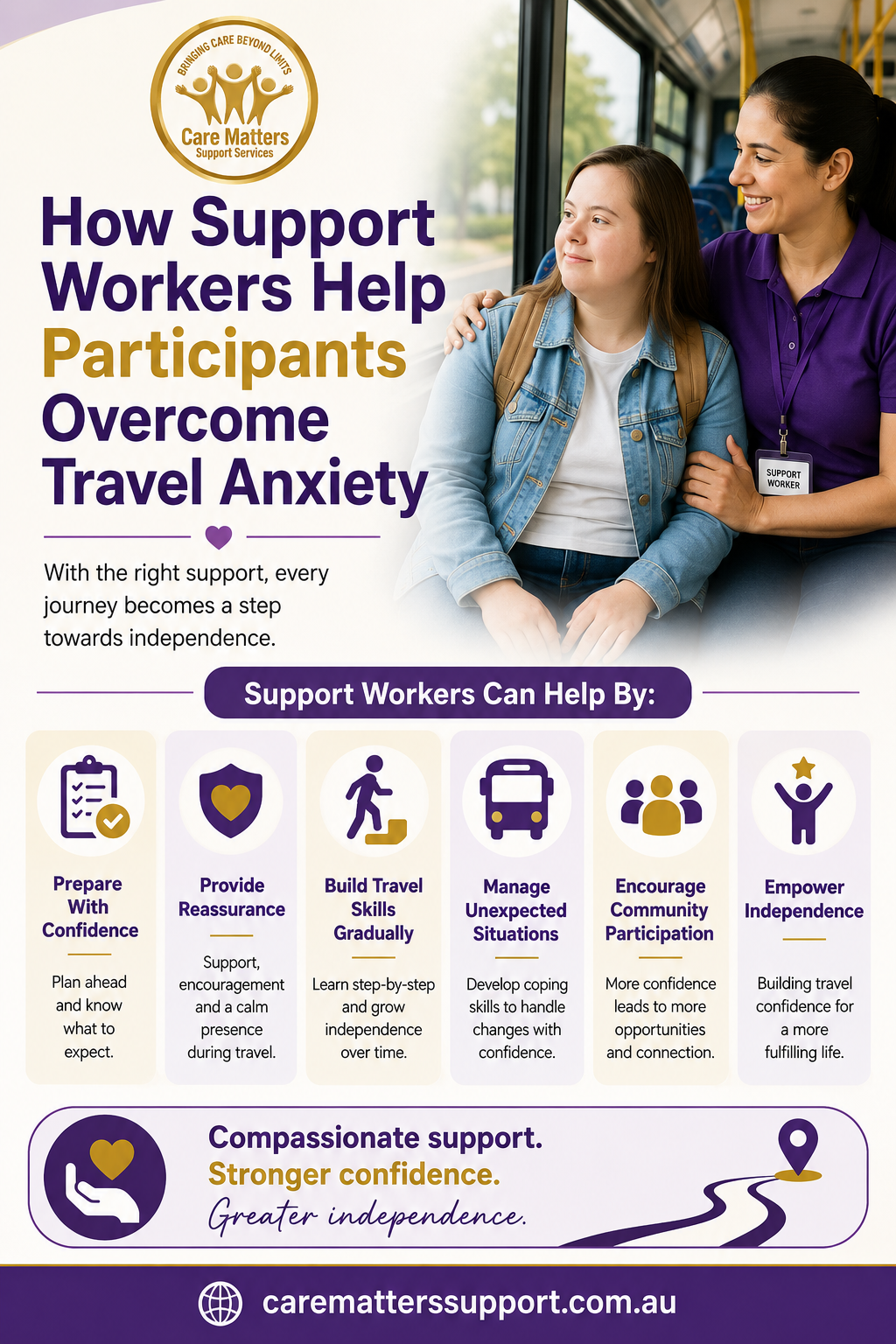
Successful travel often starts with good preparation. Support workers providing NDIS transport assistance in Geelong and other suburbs help participants become familiar with travel plans in advance, reducing uncertainty and increasing confidence.
This preparation may include:
- Reviewing travel routes
- Discussing transport options
- Explaining what to expect during the trip
- Creating visual schedules or checklists
- Practising travel scenarios
Knowing what lies ahead can make participants feel more comfortable and better equipped to handle unfamiliar situations.
Preparation also provides opportunities to address concerns before they become overwhelming.
Providing Reassurance During Travel
Many participants feel more confident when they know a trusted support worker is available to assist them throughout the journey.
Support workers offer reassurance by remaining calm, patient, and attentive. They help participants navigate public transport, locate destinations, manage time schedules, and respond to unexpected changes.
If anxiety begins to increase, support workers can use calming techniques, provide encouragement, and help participants focus on manageable steps rather than the entire journey.
This supportive presence often helps reduce stress and promotes a more positive travel experience.
Gradually Building Travel Skills
One of the primary goals of support workers offering NDIS transport assistance in Werribee and other regions is to help participants develop long-term independence rather than ongoing reliance.
Travel training is often introduced gradually. A participant may begin by travelling alongside a support worker before progressing to taking a more active role in the journey.
For example, participants may learn how to:
- Read transport timetables
- Plan travel routes
- Purchase tickets
- Use navigation tools
- Communicate with transport staff
- Manage travel safely
As confidence grows, participants often become more capable of handling different travel situations independently.
Managing Unexpected Situations
Travel does not always go according to plan. Delays, route changes, cancellations, and crowded environments can create anxiety for many participants.
Support workers help participants develop problem-solving skills and coping strategies that allow them to respond calmly to unexpected events.
By practising these skills in real-world situations, participants learn that challenges can often be managed successfully without panic or distress.
This resilience becomes an important part of building travel confidence over time.
Encouraging Community Participation
Greater confidence with travel often leads to greater community participation. Participants who feel comfortable travelling are more likely to attend social events, educational programs, recreational activities, and appointments.
Support workers help remove barriers that may have previously limited participation, opening the door to new experiences and opportunities.
This increased engagement can contribute positively to social connections, personal development, and overall wellbeing.
Empowering Participants Through Confidence and Support
Travel anxiety can feel limiting, but with the right support, many participants can develop the confidence needed to navigate their communities successfully. Support workers provide the guidance, reassurance, and practical skills required to make travel more manageable and less intimidating.
For participants in Geelong and Werribee, personalised travel support can be an important step towards greater independence, stronger community connections, and a more fulfilling everyday life.
Take the Next Step Towards Independent Travel
Our experienced support workers at Care Matters Support Services help participants in Geelong and Werribee build travel confidence, develop practical skills, and access their community with greater independence. Dial 0402866646 to get started today.
FAQs About How Support Workers Help Participants Overcome Travel Anxiety
- Can NDIS funding cover travel support services?
Yes. Depending on your NDIS plan and goals, funding may be available for support that helps you access appointments, community activities, education, employment, and other essential destinations.
- What if a participant is extremely anxious about leaving home?
Support workers can introduce travel support gradually, starting with small steps such as short walks, local outings, or familiar routes before progressing to longer journeys.
- Can support workers accompany participants on public transport?
Yes. Support workers can travel alongside participants to provide guidance, reassurance, and practical assistance while helping them become familiar with public transport systems.
- How do support workers help participants become more independent travellers?
They teach practical skills such as route planning, reading timetables, purchasing tickets, using transport apps, managing schedules, and responding to unexpected situations.
- Can travel support assist participants with attending medical appointments?
Absolutely. Support workers can help participants travel to and from medical appointments while ensuring they feel safe, comfortable, and supported throughout the journey.
- What strategies are used to manage travel-related anxiety?
Support workers may use preparation techniques, visual schedules, step-by-step planning, reassurance, breathing exercises, and gradual exposure to help reduce anxiety.
- Can participants receive support when travelling to social or recreational activities?
Yes. Travel support can help participants attend community events, social gatherings, sporting activities, classes, and other programs that promote inclusion and wellbeing.
- What happens if travel plans change unexpectedly?
Support workers help participants manage changes such as delays, cancellations, or route alterations by providing reassurance and teaching practical problem-solving strategies.
- Is travel training suitable for participants with intellectual or psychosocial disabilities?
Yes. Travel support is tailored to the individual’s needs, abilities, goals, and confidence levels, ensuring a personalised and effective approach.
- How long does it take for a participant to gain confidence with travel?
Every participant is different. Some may build confidence within a few weeks, while others may require ongoing support and practice. Progress is guided by individual goals and comfort levels.