Life skills are the everyday abilities that help people live with confidence, independence, and dignity. From cooking a simple meal to managing appointments, these skills make a real difference in how someone participates in daily life and feels in control of their own choices.
Across Manor Lakes, Geelong, and Ballarat, support workers play an important role in helping individuals build these skills in a way that is practical, personalised, and empowering. But life skills development doesn’t happen randomly, it’s thoughtfully planned, tracked, and adjusted over time to match each person’s needs, goals, and comfort level.
Understanding What “Life Skills” Really Means
Life skills development is not one-size-fits-all. For one person, it may mean learning to catch public transport independently. For another, it could be building confidence with personal hygiene routines, budgeting, or communication.
Support workers focus on both practical skills and confidence-building. The goal isn’t just to “complete the task”, but to help the person understand the steps, practise safely, and gradually build independence.
Starting With the Participant’s Goals and Preferences
The best life skills plans begin with a simple question: What does the person want to achieve?
An NDIS provider in Manor Lakes, also serving in other regions will take the time to listen to the participant’s goals, strengths, and learning style. They may also communicate with family members, carers, and allied health professionals (when appropriate) to ensure support is consistent and meaningful.
For example, if a participant in Manor Lakes wants to cook more often, the plan may focus on kitchen safety, meal prep, and creating a weekly routine. If someone in Geelong wants to build social confidence, support may include community activities, conversation practice, and safe public outings. If the goal in Ballarat is living more independently at home, support workers may work on cleaning routines, medication reminders, and planning daily tasks.
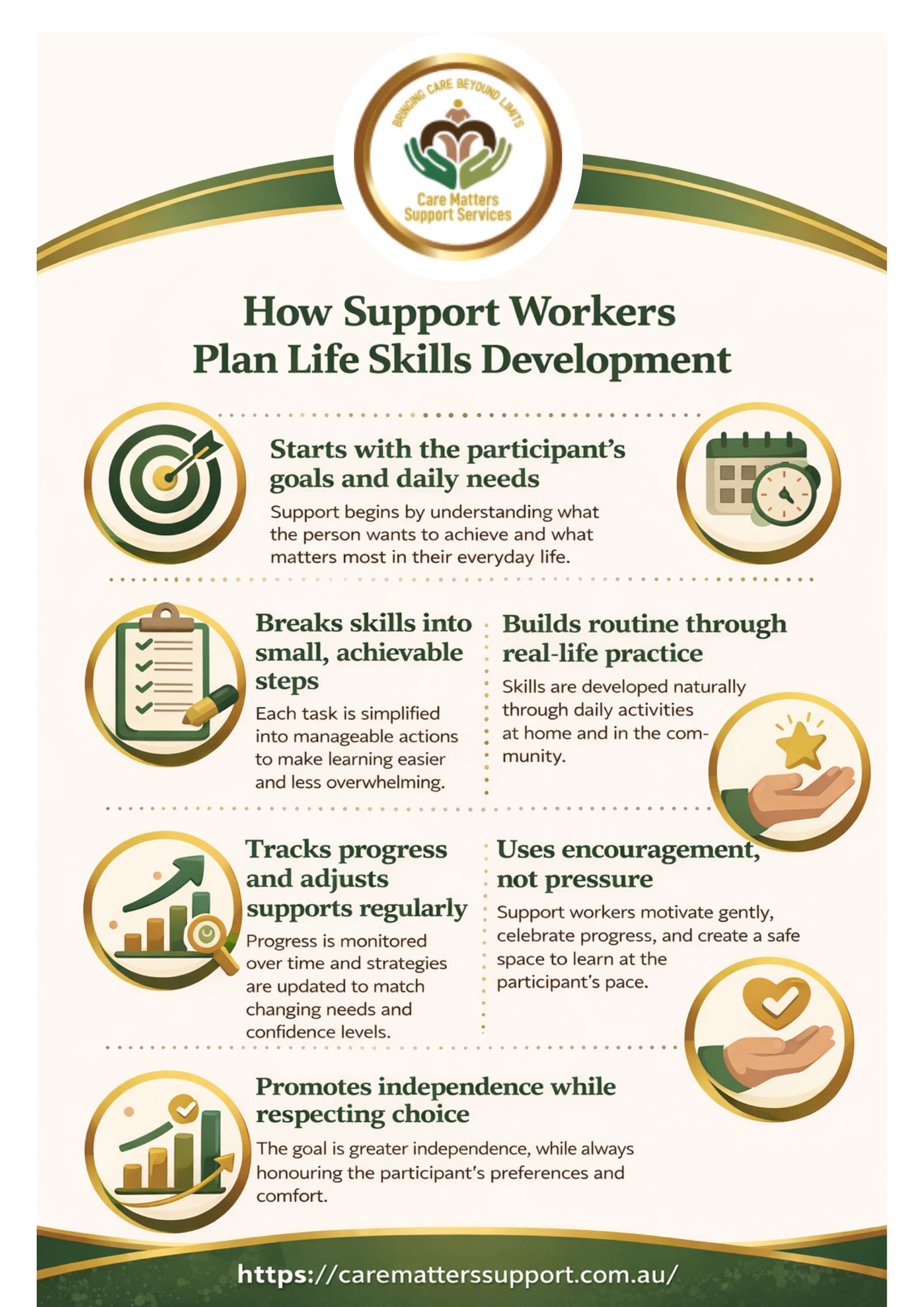
Breaking Skills Into Small, Achievable Steps
A key part of life skills development is breaking a goal into smaller steps. This helps reduce stress and makes progress easier to track.
For example, “learning to do laundry” can be broken into:
- sorting clothes
- reading washing symbols
- measuring detergent
- choosing the right cycle
- drying clothes safely
- folding and putting items away
Support workers may use visual prompts, simple checklists, demonstrations, and guided practice to support learning. These small wins build confidence and motivation over time.
Building Skills Through Real-Life Practice and Routine
Life skills are best developed through real-life practice. NDIS Providers in Geelong and other mentioned regions include learning in everyday routines rather than making it feel like a formal lesson.
This might include:
- practising money skills during grocery shopping
- improving time management by planning the day together
- learning communication by ordering at a café or making a phone call
- building personal routines with morning and evening check-ins
In areas like Manor Lakes, Geelong, and Ballarat, this can also mean supporting participants to explore local community spaces, attend activities, and practise independence in safe, familiar environments.
Encouragement Over Pressure
Support workers understand that life skills development should never feel rushed or forced. It takes patience, trust, and a supportive environment.
Some participants may experience anxiety, fatigue, sensory overload, or low confidence — and that’s okay. Instead of focusing on setbacks, support workers adjust their approach, provide reassurance, and keep the person motivated with positive reinforcement.
Tracking Progress and Adjusting the Plan
Life skills planning is an ongoing process. NDIS providers in Ballarat and the surrounding regions regularly observe progress and make adjustments where needed. This may include:
- noting what the participant can do independently
- identifying where extra support is still required
- increasing challenges as confidence grows
- introducing new skills once goals are achieved
The plan evolves as the participant grows because development is personal and not always linear.
Final Words
NDIS providers use a wide array of methods to plan life skill development, and they do so using evidence-based approaches while considering the needs of the participants they serve. However, if you or your loved one is under NDIS, discuss the supports carefully with your provider before proceeding.
Call Now to Fix an Appointment
To get started with NDIS, get in touch with Care Matters Support Services now. We are your reliable disability services and support organisation helping you navigate your journey with confidence. Dial 0402866646 to make an appointment.
Frequently Asked Questions
- How do support workers decide which life skills should be prioritised first?
They prioritise skills based on the participant’s personal goals, daily challenges, safety needs, and what will create the biggest improvement in independence and confidence.
- Can life skills development still work if a participant has low motivation or anxiety?
Yes. Support workers use gentle encouragement, interest-based activities, and small achievable steps to reduce pressure and build confidence over time.
- How do support workers measure progress without making the participant feel judged?
Progress is tracked through supportive observations, simple goal check-ins, and celebrating improvements, focusing on growth rather than perfection.
- What if a participant learns a skill during support hours but struggles to repeat it later?
Support workers reinforce the skill through repetition, visual prompts, and consistent routines, and may adjust the method to suit the participant’s learning style.
- How do support workers balance helping and promoting independence at the same time?
They provide “just enough support” using step-by-step guidance, then gradually reduce assistance as the participant becomes more confident and capable.
- Can life skills goals be included for both home-based and community-based learning?
Absolutely. Many plans include home routines (cooking, cleaning, hygiene) and community skills (shopping, transport, social participation) for real-world independence.
- How do support workers support participants who need assistive technology for life skills tasks?
They help integrate assistive tools into everyday routines, ensuring the participant understands how to use them safely and consistently.
- What happens if a participant’s goals change halfway through the plan?
The plan can be updated anytime. Support workers adapt goals to reflect new interests, changing needs, or improvements in ability and confidence.
- How do support workers ensure life skills development remains culturally respectful?
They follow the participant’s preferences, household values, routines, and communication style, ensuring learning feels comfortable and appropriate.
- How do support workers manage life skills development when multiple supports are involved?
They collaborate with families, support coordinators, and allied health professionals to keep strategies consistent and prevent mixed messaging.