
Life skills development programs do much more than teach practical everyday abilities. They also help participants build confidence, resilience, and the skills needed to respond appropriately during unexpected situations. Whether it’s a medical incident, fire alarm, severe weather event, or another emergency, well-structured programs have clear procedures to protect everyone involved while promoting independence.
For participants and their families in Manor Lakes, Point Cook, and Ringwood, understanding how emergencies are managed can provide reassurance and confidence when choosing the right life skills program.
Every Program Has an Emergency Response Plan
Quality life skills development in Manor Lakes and programs organised in other suburbs include detailed emergency response plans that outline exactly what staff should do in different situations. These plans are designed to minimise risk while ensuring every participant receives prompt support.
Emergency plans typically include:
- Evacuation procedures
- Emergency contact information
- First aid protocols
- Communication processes with families and carers
- Procedures for medical emergencies
- Incident reporting and follow-up
These plans are reviewed regularly to ensure they remain current and effective.
Staff Receive Emergency Training
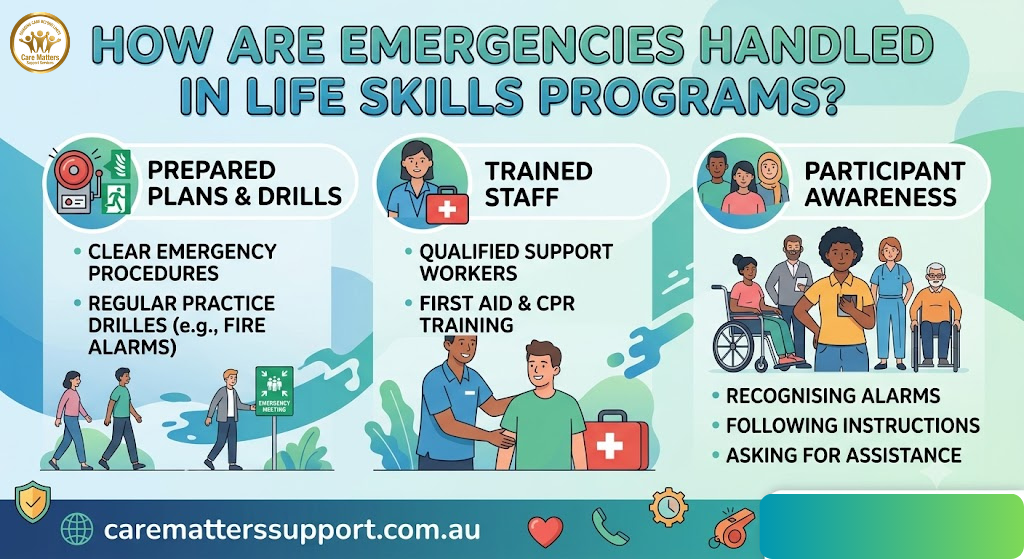
Qualified support workers are trained to remain calm and act quickly during emergencies. Their training often includes:
- First aid and CPR
- Fire safety procedures
- Evacuation management
- Responding to medical incidents
- Managing behavioural emergencies
- Risk assessment and hazard identification
This preparation helps staff make informed decisions while keeping participants safe throughout any unexpected event.
Individual Support Plans Improve Safety
Every participant has unique needs, abilities, and health considerations. Life skills development programs often create personalised support plans that identify important information, including:
- Medical conditions
- Allergies
- Medication requirements
- Mobility needs
- Communication preferences
- Emergency contacts
Having this information readily available allows staff to respond appropriately if an emergency occurs.
Participants Learn Emergency Awareness
Life skills development is about building independence, which includes understanding how to respond safely during emergencies.
Programs may teach participants how to:
- Recognise emergency alarms
- Follow evacuation instructions
- Identify safe meeting points
- Contact emergency services when appropriate
- Stay calm during stressful situations
- Ask trusted adults for assistance
These practical lessons build confidence while preparing participants for real-life situations.
Communication Is Prioritised
Clear communication plays a vital role during any emergency. Staff work to keep everyone informed while reducing confusion and anxiety.
Depending on the situation, communication may include:
- Contacting family members or carers
- Informing emergency services
- Updating participants using clear and reassuring language
- Recording incidents accurately for future review
Open communication helps families remain informed and reassured throughout the process.
Regular Practice Builds Confidence
Many providers conduct emergency drills as part of life skills development in Point Cook and other suburbs to help both staff and participants become familiar with safety procedures. These practice sessions reduce panic and improve everyone’s confidence if a real emergency occurs.
Regular drills may include:
- Fire evacuations
- Emergency assembly procedures
- Safe exits from activity areas
- Responses to severe weather events
Practising these procedures creates familiarity, making emergency responses more effective.
Risk Assessments Help Prevent Emergencies
A significant part of emergency management involves preventing incidents before they occur.
Support providers regularly assess:
- Activity risks
- Environmental hazards
- Equipment safety
- Participant support requirements
- Transport arrangements
- Community outing risks
Identifying potential hazards early allows staff to implement strategies that reduce the likelihood of emergencies occurring.
Emotional Support After an Incident
Emergencies can be stressful for participants, families, and staff. After any incident, quality providers focus on emotional wellbeing as well as physical safety.
Support may include:
- Reassurance and emotional guidance
- Reviewing what happened in simple, understandable language
- Updating support plans if required
- Working closely with families and healthcare professionals
This approach helps participants regain confidence and continue progressing in their life skills journey.
Choosing a Program That Prioritises Safety
When selecting life skills development in Ringwood or other suburbs, ask providers about their emergency procedures, staff qualifications, and individual support planning. A provider that values preparation, communication, and participant wellbeing creates a safer environment where individuals can learn, grow, and develop independence with confidence.
Learn Safely, Grow Confidently
Looking for a trusted life skills development program? Care Matters Support Services is here to meet your needs. Call 0402866646 today to learn how we support independence in a safe, caring, and well-prepared environment.
FAQs About How Are Emergencies Handled in Life Skills Development Programs?
- What should I do if my family member has a medical condition?
Inform the provider before the program begins. They will create an individual support plan that includes medical information, medications, emergency contacts, and appropriate response procedures.
- Are life skills development staff trained to handle emergencies?
Yes. Reputable providers ensure their support workers are trained in first aid, CPR, emergency evacuation procedures, incident management, and participant safety protocols.
- How are parents or carers informed during an emergency?
Providers follow clear communication procedures, contacting nominated family members or carers as soon as it is safe and appropriate while keeping them updated on the situation.
- Do participants practise emergency procedures?
Yes. Many life skills development programs conduct regular emergency drills, such as fire evacuations, to help participants understand safety procedures and respond calmly if an emergency occurs.
- Are emergency plans customised for each participant?
Absolutely. Individual emergency and support plans consider a participant’s health conditions, mobility, communication needs, allergies, medications, and any additional support requirements.
- How do life skills development programs reduce the risk of emergencies?
Programs carry out regular risk assessments, maintain safe learning environments, inspect equipment, plan safe community outings, and train staff to identify and minimise potential hazards before they become emergencies.