Community participation plays an important role in helping people with mobility issues build independence, develop friendships and enjoy meaningful experiences. Through the National Disability Insurance Scheme (NDIS), eligible participants may access supports that help them engage in social, recreational and community-based activities. Setting clear, achievable goals can make these experiences more purposeful and rewarding. By identifying personal interests, understanding individual needs and choosing the right support, participants can work towards greater confidence and a stronger sense of belonging.
Why Are Community Participation Goals Important?
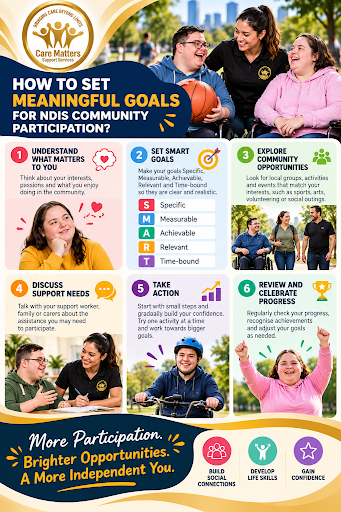
Meaningful goals provide direction and help participants focus on what matters most to them. Rather than simply attending activities, individuals can work towards specific outcomes, such as making new friends, learning practical skills or becoming more comfortable in social settings.
Goals should reflect each person’s preferences, abilities and aspirations. They should also be flexible enough to accommodate changing interests, circumstances and support needs.
Identify Your Interests and Personal Aspirations
The first step for NDIS community participation in Melbourne is to consider which activities bring enjoyment and what you would like to achieve. Some participants may want to join a local sporting group, attend art classes, explore community events or develop cooking skills. Others may prioritise meeting new people or becoming more confident when visiting unfamiliar places.
Discussing these interests with family members, carers or support workers can help identify suitable opportunities. However, the participant’s own preferences should remain central to the decision-making process.
Set Clear and Achievable Goals
Breaking larger ambitions into smaller steps makes progress easier to manage. For example, someone who wants to develop social connections could begin by attending a small group activity before progressing to larger community events.
Consider using the SMART goal framework. Goals should be specific, measurable, achievable, relevant and time-bound. Instead of setting a broad goal such as becoming more social, a participant might aim to attend one preferred community activity each week for the next month.
This approach provides a practical way to recognise progress and identify where additional support may be helpful.
Explore Community Participation Opportunities in Melbourne
Finding activities that match personal goals can make participation more enjoyable and sustainable. People seeking NDIS community participation in Melbourne can explore suitable recreational programs, hobby groups, cultural events, volunteering opportunities and local community activities.
Access to community participation in Melbourne may also involve support with transport planning, navigating public spaces, communicating with others or attending appointments and events.
A suitable disability support provider can help participants explore available options and identify activities that align with their interests, individual circumstances and support requirements.
Review Progress and Adjust Your Goals
Goals do not need to remain unchanged. Regularly reviewing progress helps participants recognise achievements, discuss challenges and decide whether their priorities have shifted.
Support workers can encourage reflection by asking what activities the participant enjoyed, which skills they developed and what they would like to try next. Celebrating small achievements can also strengthen motivation and confidence.
Setting meaningful goals for NDIS community participation in Melbourne begins with understanding personal interests, establishing realistic milestones and choosing activities that support individual aspirations. With the right encouragement and opportunities, participants can develop skills, build relationships and become more involved in their communities.
Get In Touch WIth Us Today
Ready to work towards your community participation goals? Contact Care Matters Support Services to discuss personalised disability support options that can help you explore new opportunities, build confidence and work towards greater independence.
Call us at 0402866646 or email us at admin@carematterssupport.com.au for more information.
FAQs About How to Set Meaningful Goals for NDIS Community Participation?
- What are NDIS community participation goals?
NDIS community participation goals are personal objectives that help participants become more involved in social, recreational and community activities. These goals may include making new friends, joining local groups, learning new skills or building confidence when participating in community events.
- Why is goal setting important for NDIS community participation?
Goal setting provides direction and helps participants focus on activities that matter to them. Clear goals can encourage independence, improve confidence, develop social skills and help individuals recognise their progress towards greater community involvement.
- How can I identify the right community participation goals?
Start by identifying your interests, strengths and personal aspirations. Consider activities you enjoy, skills you want to develop and experiences you would like to try. Discussing your preferences with support workers, family members or carers can help you explore suitable opportunities while keeping your choices at the centre.
- What is the SMART goal framework for NDIS participants?
The SMART framework helps participants create goals that are specific, measurable, achievable, relevant and time-bound. For example, instead of aiming to become more social, you could set a goal to attend one preferred community activity each week for the next month.
- What activities can support NDIS community participation goals?
Suitable activities may include art classes, sporting groups, cooking workshops, volunteering, hobby clubs, community events and social outings. The best activities depend on each participant’s interests, abilities, support requirements and personal goals.
- How can NDIS community participation in Melbourne help build independence?
NDIS community participation in Melbourne can help eligible participants practise everyday skills, develop social connections and access local activities. Depending on individual needs and available support, assistance may include planning outings, navigating public spaces and building confidence in unfamiliar environments.
- How do I find suitable community participation opportunities in Melbourne?
Start by exploring local recreation centres, libraries, hobby groups, community programs and inclusive activities. You can also speak with a disability support provider about opportunities that align with your interests, accessibility requirements and NDIS goals.
- How often should NDIS community participation goals be reviewed?
Goals should be reviewed regularly to assess progress, identify challenges and determine whether priorities have changed. The review frequency depends on individual circumstances. Participants can work with their support team to adjust goals and activities as their confidence, interests and skills develop.
- Can a disability support worker help me achieve my community participation goals?
Yes, a disability support worker can provide practical assistance and encouragement to help you work towards your goals. Depending on your support arrangements, this may include attending activities, practising communication skills, planning outings and developing greater confidence in community settings.
- Can Care Matters Support Services help with NDIS community participation goals?
Care Matters Support Services can discuss your disability support needs and explore suitable support options to help you work towards greater community involvement. Contact the team to discuss your interests, personal goals and the assistance that may be appropriate for your circumstances.