
Understanding individual requirements is essential for delivering effective NDIS support. Every participant has different abilities, preferences, personal goals and support needs. Therefore, NDIS providers must take the time to understand each individual before developing a suitable support approach. Through open communication, personalised assessments and regular feedback, providers can ensure participants receive services that align with their expectations and help them achieve greater independence.
For individuals and families in Ballarat and Hoppers Crossing, choosing an NDIS provider that prioritises personal requirements can make a significant difference to the overall support experience.
1. Conducting Individual Needs Assessments
One of the first steps NDIS providers in Ballarat or Hoppers Crossing take is understanding a participant’s current circumstances. They may discuss daily routines, physical abilities, communication preferences, personal challenges and areas where additional assistance is required.
These discussions help providers understand what participants can manage independently and where they may need support. They also help identify suitable services, whether that involves personal care, household assistance, community participation or daily living support.
A participant-led assessment ensures that support arrangements reflect individual circumstances rather than following a standard approach.
2. Listening to Participants and Their Families
Effective communication plays an important role in understanding participant requirements. NDIS providers engage directly with participants to learn about their preferences, concerns and expectations.
Where appropriate and with the participant’s consent, providers may also involve family members, carers or support coordinators. These conversations can provide valuable insights into established routines, communication needs and specific challenges.
However, participants should remain at the centre of all decisions. Respecting their choices and encouraging active involvement helps create a supportive relationship built on trust.
3. Understanding Individual Goals and Aspirations
NDIS support is not limited to helping participants manage everyday activities. It also aims to empower people with disabilities to work towards meaningful personal goals.
Providers discuss what participants want to achieve, whether that means developing independent living skills, improving social connections, learning new activities or becoming more involved in their communities.
For participants in Ballarat and Hoppers Crossing, these goals may include accessing local recreational opportunities, attending social activities or becoming more confident with everyday responsibilities.
Understanding these aspirations allows providers to recommend relevant supports that encourage personal growth and independence.
4. Creating Personalised Support Plans
Once NDIS providers in Hoppers Crossing or Ballarat understand individual requirements, they can develop support arrangements that reflect each participant’s needs and NDIS plan.
A personalised support approach considers factors such as:
- Preferred support schedules and daily routines.
- Communication methods and accessibility requirements.
- Assistance with personal care and household activities.
- Social, recreational and community participation goals.
- Individual abilities, interests and support preferences.
Providers should also ensure that recommended supports align with the participant’s NDIS plan, funding and applicable service requirements.
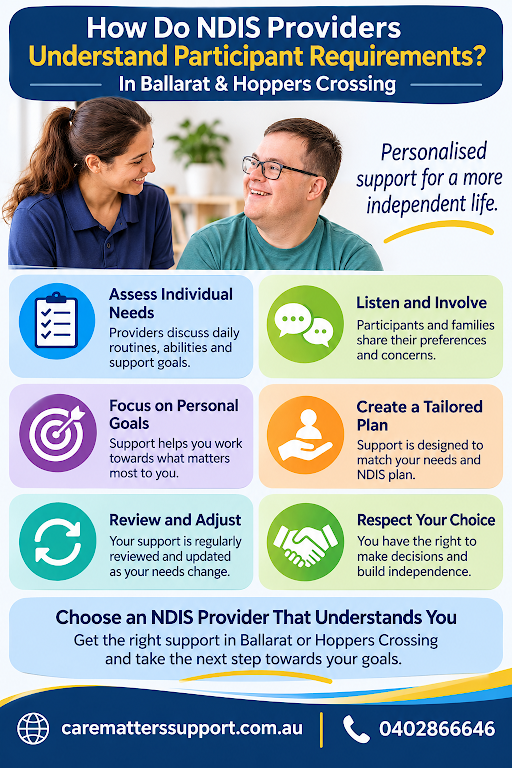
5. Reviewing Feedback and Changing Support Arrangements
Participant requirements can change over time. Someone who initially needs assistance with everyday tasks may gradually develop the skills and confidence to complete certain activities independently.
NDIS providers regularly communicate with participants to understand whether their current arrangements remain suitable. Feedback, progress discussions and support reviews help identify areas that may require adjustment.
If a participant’s circumstances or goals change, providers can discuss appropriate modifications to their services. This flexibility helps maintain relevant and effective support.
6. Respecting Participant Choice and Independence
Understanding requirements also means recognising that participants have the right to make decisions about their lives. NDIS providers should respect personal boundaries, cultural preferences, individual choices and preferred ways of receiving assistance.
Rather than taking over everyday responsibilities, support workers should encourage participants to develop their abilities and make independent decisions wherever possible.
This person-centred approach promotes dignity, confidence and greater control over daily life.
Choose an NDIS Provider That Understands Your Needs
Finding suitable disability support begins with choosing a provider that listens, communicates and understands individual requirements. From initial assessments to ongoing support reviews, a participant-focused approach helps ensure services remain relevant to personal goals and changing circumstances.
Whether you are looking for disability support in Ballarat or Hoppers Crossing, prioritise an NDIS provider that values your choices, respects your independence and works towards meaningful outcomes.
Frequently Asked Questions
- How do NDIS providers understand participant requirements?
NDIS providers understand participant requirements through individual assessments, direct communication, discussions about personal goals and regular feedback. This helps them develop suitable, personalised support arrangements.
- Why is understanding participant needs important in NDIS support?
Understanding individual needs ensures participants receive appropriate assistance that reflects their abilities, preferences and goals. It also promotes independence, dignity and better support outcomes.
- What information do NDIS providers collect during an initial assessment?
Providers may discuss daily routines, personal care requirements, communication preferences, existing abilities, challenges, lifestyle choices and individual support goals.
- Can NDIS support services be customised to individual requirements?
Yes. NDIS support can be tailored to individual circumstances, preferences and goals, provided the services align with the participant’s NDIS plan and funding.
- How often should NDIS support arrangements be reviewed?
Support arrangements should be reviewed regularly and whenever a participant’s circumstances, preferences or goals change. Regular feedback helps providers maintain suitable support.
- How can I find a suitable NDIS provider in Ballarat or Hoppers Crossing?
Look for registered or otherwise appropriately qualified providers with relevant service experience, transparent communication and a person-centred approach. Discuss your requirements, available services and support preferences before making a decision.
Take the First Step Towards Personalised NDIS Support
Looking for disability support that understands your individual needs and goals? Connect with Care Matters Support Services, your trusted disability services and support organisation. Call 0402866646 today to discuss your requirements and find support that promotes independence, confidence and well-being.