Independent living is about having the confidence, skills and support to manage everyday activities and make personal choices. For people living with disability, developing these abilities can improve independence, build self-esteem and support a greater sense of control over daily life. Life skills development focuses on practical abilities that help individuals participate more actively in their homes and communities. With the right guidance and person-centred support, individuals can work towards their personal goals and enjoy a more independent lifestyle.
What Is Life Skills Development?
Life skills development involves learning and practising essential abilities needed to navigate everyday situations. These may include personal care, household management, communication, decision-making, budgeting and time management.
For people with mobility issues, these skills can be developed gradually through tailored activities, practical experience and ongoing encouragement. The aim is not simply to complete daily tasks but to build confidence and empower individuals to make informed choices about their lives.
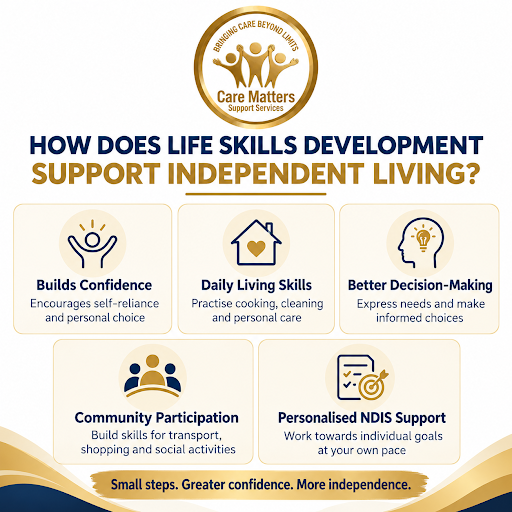
How Life Skills Development Supports Independent Living
-
Builds Confidence and Self-Reliance
Learning to complete everyday tasks can help individuals feel more capable and confident. Activities such as preparing simple meals, organising personal belongings or following a daily routine encourage self-reliance. Over time, practising these skills can help individuals take greater responsibility for their daily lives while receiving support when needed.
-
Improves Daily Living Skills
Managing everyday responsibilities is an important part of independent living. Life skills training can help individuals learn personal hygiene, meal preparation, laundry, cleaning and shopping. These practical abilities can make daily routines easier to manage and support greater participation in household activities.
-
Encourages Better Communication and Decision-Making
Effective communication helps individuals express their needs, preferences and concerns. Developing decision-making skills also enables them to make choices about daily activities, personal goals and social participation. These abilities support autonomy, strengthen relationships and encourage meaningful involvement in the community.
-
Promotes Community Participation
Independent living extends beyond the home. Skills such as using public transport, managing money, following directions and interacting with others can help individuals participate more confidently in community activities. Tailored support can make it easier to access local services, attend appointments and pursue hobbies or social interests.
-
Provides Personalised Support Through the NDIS
Working with an experienced NDIS provider in Melbourne can help individuals identify their strengths, understand their support needs and work towards meaningful goals. Depending on individual circumstances and NDIS plan funding, support may include assistance with daily living activities, skill-building opportunities and community participation.
Quality support should respect personal preferences, encourage choice and adapt to each individual’s pace of learning.
Why Choose Life Skills Development in Melbourne?
Accessing life skills development in Melbourne can help people with disability build practical abilities within familiar environments and local communities. Individualised support allows participants to practise everyday tasks in real-life situations, helping them apply what they learn to their routines.
Care Matters Support Services understands the importance of person-centred support that focuses on individual abilities, goals and preferences. A supportive approach can help participants develop skills progressively while maintaining dignity, choice and independence.
Life skills development plays an important role in supporting independent living by building confidence, strengthening daily living abilities and encouraging greater community participation. With personalised guidance and consistent practice, people with disability can work towards greater autonomy and a lifestyle that reflects their individual goals.
Make An Appointment Today
Ready to take the next step towards greater independence? Contact Care Matters Support Services to discuss personalised support options and explore how life skills development can help you or your loved one work towards everyday goals.
Call us at 0402866646 or email us at admin@carematterssupport.com.au for more information.
FAQs
- What is life skills development?
Life skills development involves learning practical abilities needed to manage everyday life, such as personal care, cooking, cleaning, budgeting, communication and decision-making. These skills help individuals build confidence, improve self-reliance and work towards greater independence.
- How does life skills development support independent living?
Life skills development supports independent living by helping individuals manage daily routines, make informed decisions and participate more actively in their communities. With personalised guidance and regular practice, individuals can strengthen their abilities and take greater control of their daily lives.
- What life skills are important for independent living?
Important life skills include personal hygiene, meal preparation, household management, money management, time management, communication, problem-solving and using public transport. The skills prioritised depend on each person’s abilities, support needs and personal goals.
- Who can benefit from life skills development?
People with impairments who want to develop greater independence may benefit from life skills development. Support can be tailored to individual needs, abilities and goals, helping participants build practical skills at their own pace.
- How can an NDIS provider in Melbourne support life skills development?
An NDIS provider in Melbourne can help eligible participants work towards their independence goals through appropriate, individualised support. Depending on their NDIS plan and available funding, this may include assistance with daily living activities, practising household tasks and developing community participation skills.
- Can life skills development improve confidence and self-esteem?
Yes. Learning to complete everyday tasks and make personal decisions can help individuals recognise their abilities and feel more confident. Celebrating progress and encouraging independence can also support self-esteem and a greater sense of achievement.
- What is included in life skills development in Melbourne?
Life skills development in Melbourne may include support with cooking, cleaning, shopping, budgeting, personal care, communication and accessing community activities. The specific supports depend on individual goals, circumstances and the services available through the chosen provider.
- How long does it take to develop independent living skills?
The time required varies depending on an individual’s starting abilities, learning preferences, support needs and goals. Some skills may develop quickly, while others require consistent practice and ongoing assistance. Progress should be measured against personal goals rather than a fixed timeframe.
- How can families encourage independent living skills at home?
Families can encourage independence by involving individuals in everyday tasks, offering opportunities to make choices, providing clear instructions and celebrating progress. Allowing time to practise skills in a safe, supportive environment can help build confidence and self-reliance.
- How can Care Matters Support Services help with life skills development?
Care Matters Support Services can help individuals explore personalised support options focused on everyday abilities, personal goals and greater independence. Contact the team to discuss your circumstances, understand available supports and identify practical steps towards independent living.